
When parents separate, deciding what happens next for the children can be harder than many people expect. You might agree that the children should spend time with both parents, but disagree about how that should work in everyday life.
Perhaps one parent wants the children to stay overnight during the week, while the other thinks this will disrupt their school routine. You might disagree about weekends, Christmas, birthdays or who should take the children to their usual activities.
At first, these may seem like small disagreements. But when neither parent is willing to change their position, even a simple conversation can become stressful.
If you are in this situation, you may be considering family mediation or wondering whether it is time to apply to the family court.
Mediation Workington allows parents to sit down with the help of an impartial professional and work towards arrangements they can both accept. Going to court is different. If parents cannot resolve their disagreements, a judge may need to make the final decision.
So, which route should you consider? Here is what parents in England and Wales should understand before deciding.
Family Mediation vs Court: Who Makes the Decisions?
The main difference is who makes the decisions.
In family mediation, you and your former partner discuss the arrangements with help from an impartial mediator. The mediator helps you identify the issues, explore possible solutions and work towards an agreement. They do not decide what the arrangements should be for your children.
The mediator will not take sides or decide how much time the children should spend with either parent. Any agreement is made by you both, rather than imposed by the mediator.
If you cannot agree, mediation does not prevent you from considering other options, including applying to court where appropriate.
You can also read our guide to how long family mediation takes.
For example, imagine you disagree about where your children should spend their weekends. One parent wants alternate weekends, while the other would prefer the children to stay with them because of school and extracurricular activities.
Rather than continuing the same argument, mediation gives you a chance to look at the practical details and discuss an arrangement that could work for everyone.
You can discuss matters such as:
- Where the children will live and how much time they spend with each parent
- Weekday visits, weekends and overnight stays
- School holidays, Christmas and other important celebrations
- School collections, drop-offs and extracurricular activities
- Birthdays and family occasions
- Communication between parents about the children
- Changes to arrangements as the children grow older
Court proceedings are different. If you apply for a child arrangements order and the dispute remains unresolved, the court can decide where the children live, when they spend time with each parent and other arrangements covered by the application.
When making decisions about a child’s upbringing, the court’s paramount consideration is the child’s welfare. It considers the circumstances of the individual child rather than simply dividing time equally between parents. This is set out in section 1 of the Children Act 1989.
Which option should you consider?
If you and your former partner are able to take part in discussions safely, mediation may be worth considering, even if you do not see eye to eye. It gives you an opportunity to work towards arrangements yourselves, with the mediator helping to keep the discussion focused and constructive.
If there are serious safety concerns, safeguarding issues or an urgent need for a court decision, mediation may not be appropriate. In those circumstances, seek legal advice about the options available to you.
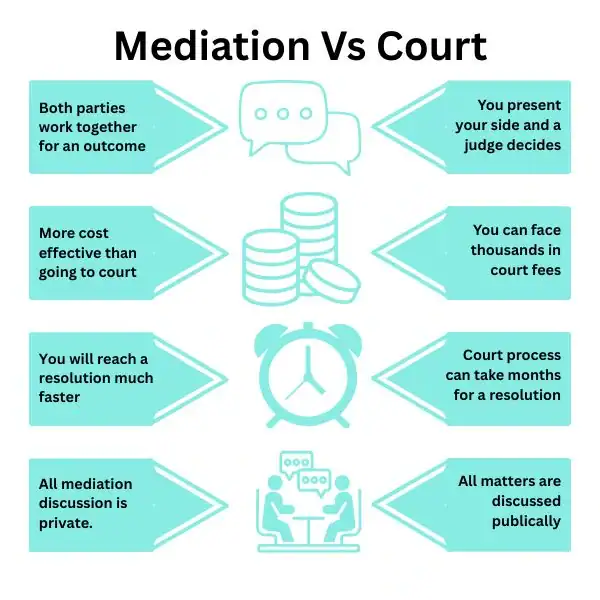
How Much Does Family Mediation Cost Compared With Going to Court?
Cost is understandably a concern, particularly when you are already dealing with the financial changes that often follow separation.
The cost of family mediation Workington depends on the mediator’s fees, how many sessions you need and the issues you want to resolve. Some disputes can be dealt with in a relatively small number of sessions, while others need more time.
You will usually begin with a Mediation Information and Assessment Meeting (MIAM). This is an opportunity to explain your circumstances, understand how mediation works and have the mediator assess whether it is suitable. The MIAM fee is separate from the cost of any mediation sessions that follow.
Before booking, ask the mediator about their fees, what is included and whether there could be additional charges for preparing documents or other services.
Legal aid
You may qualify for legal aid if your financial circumstances and the type of dispute meet the eligibility requirements.
Legal aid can cover the MIAM and mediation where you qualify. Where only one person is eligible, it can also cover the MIAM and the first mediation session for both participants, with further eligible mediation costs covered for the person who qualifies.
You can check the requirements on GOV.UK’s legal aid guidance.
Family Mediation Voucher Scheme
Parents may be eligible for a contribution of up to £500 towards mediation through the Family Mediation Voucher Scheme. The voucher is subject to eligibility, the type of dispute and funding availability.
The scheme is intended to contribute towards mediation sessions. It cannot be used to pay for the MIAM itself, and it may not cover the full cost of mediation.
The voucher is generally available for eligible disputes involving children. Certain financial disputes may qualify when they are being dealt with alongside a child-related dispute.
Your mediator can explain whether your case meets the scheme’s requirements and whether a voucher is available.
You can read the official details of the Family Mediation Voucher Scheme on GOV.UK.
What about court costs?
Applying to court involves a court application fee. If you instruct a solicitor, their fees and any further legal expenses will depend on the work required and how the case progresses. A dispute that requires multiple hearings or additional evidence may involve further costs.
It is not possible to say that mediation will always be cheaper. However, asking about the likely cost of mediation and comparing it with the potential costs of court proceedings can help you decide which route to consider.
Can Family Mediation Help You Agree Where the Children Live and When They See Each Parent?
Yes. Helping parents agree on practical child arrangements is one of the main reasons people use family mediation.
Sometimes the disagreement is about something specific. One parent may want additional overnight stays, while the other is concerned about how the children will manage the change.
In other families, an existing arrangement no longer works. Perhaps one parent has changed jobs, the children have started a new school or travelling between two homes has become difficult. If a disagreement involves a school change, you may also find our guide to changing a child’s school after separation helpful.
These situations need more than a simple agreement about the number of days each parent gets.
During mediation, you can look at the details that affect your children’s everyday lives, including:
- Their school timetable and travel arrangements
- Their ages, routines and individual needs
- Relationships with both parents and wider family members
- Clubs, hobbies and other regular commitments
- Each parent’s work schedule
- How holidays and special occasions will be organised
Child-inclusive mediation may be an option in suitable cases. A specially trained mediator can meet with a child separately to hear their views and experiences and, where appropriate, help communicate them to their parents.
This does not happen automatically. It depends on whether the process is suitable, the child’s willingness to participate and the necessary consent. Children should not be expected to choose between their parents or take responsibility for decisions about their arrangements. Their views may, however, help parents understand how the current arrangements are affecting them.
What if your children are old enough to express their views?
Their feelings may also be relevant. Child-inclusive mediation Workington is an option in suitable cases, where a specially trained mediator can meet with a child separately to hear their views.
This is not something that happens automatically. It requires appropriate consent, the child’s willingness to participate and an assessment of whether it is suitable.
Children should not be made responsible for choosing between their parents. Their views can, however, help parents understand how the arrangements are affecting them.

What Happens If Your Ex-Partner Refuses Mediation or Will Not Compromise?
You might be ready to discuss things calmly, but what happens if your former partner refuses to attend mediation?
This can be frustrating, particularly if you feel that the children need a more settled routine and the disagreements are affecting family life.
You cannot force another parent to participate in mediation. Both people need to be willing to take part.
You can still arrange your own Mediation Information and Assessment Meeting (MIAM). During this meeting, you can explain what has been happening, ask questions about mediation and discuss whether it may be suitable for your situation.
If your former partner refuses to attend or does not wish to proceed, the mediator can explain your options and what this means if you are considering a court application.
Do you need a MIAM before applying to court?
In most cases, you must attend a MIAM before applying to the family court about child arrangements, unless a recognised exemption applies.
Exemptions may apply in certain circumstances, including some cases involving domestic abuse, child protection concerns or urgency. The requirements depend on the circumstances and the type of application.
Attending a MIAM does not mean you have to agree to mediation. It is an opportunity to consider whether mediation could help before taking the matter further.
If the other parent refuses to participate, or the mediator considers mediation unsuitable, you may be able to proceed with a court application, subject to the applicable requirements.
A refusal to mediate does not mean you have no options for resolving the disagreement.
Also Read: What Happens to the Family Home When You Separate in the UK?

Is Family Mediation Suitable If There Is Conflict, Pressure or a History of Domestic Abuse?
Not every disagreement between separated parents can be resolved through ordinary joint mediation.
For some people, the difficulty is not simply that they disagree. They may feel intimidated, pressured or unable to express their views honestly in front of their former partner.
If you have experienced domestic abuse, controlling behaviour, threats or other serious concerns, tell the mediator before any joint session is arranged. The mediator needs to assess whether mediation is suitable and whether you can participate freely and safely.
Depending on your circumstances, alternative arrangements may be considered.
Shuttle mediation
In shuttle mediation, parents remain in separate rooms and the mediator communicates between them. This can avoid the need to sit together and discuss difficult issues face to face.
Online or remote mediation
Parents can join mediation online from different locations, so they do not have to travel to the same venue. Where needed, the mediator can arrange for each parent to take part separately rather than meeting on the same call.
When might court be more appropriate?
Where there are serious safeguarding concerns, ongoing intimidation or a risk of harm, mediation may not be suitable. You may need legal advice about applying to court and whether urgent protection is available.
You should never feel that you have to take part in mediation simply because you want to resolve arrangements for your children. Your safety and ability to speak freely matter.
If you want to understand the process itself, read our guide to how family mediation works.
How Long Does Family Mediation Take Compared With a Court Case?
When arrangements for your children are uncertain, waiting for a resolution can be difficult for the whole family.
Mediation may provide an opportunity to address disagreements sooner, particularly when both parents are willing to participate and focus on the issues that need resolving.
Some parents reach an agreement in one or two sessions. Others need more time, especially when there are several disagreements or communication has broken down. There is no fixed number of sessions, and the timescale will depend on your circumstances, the issues involved and whether progress is being made.
Court proceedings follow a formal timetable. How long they take depends on the court’s availability, the issues involved, whether additional information or reports are required and how many hearings are needed.
There is also a difference in how much control parents have over the discussions.
In mediation, you can focus on the issues that matter most to your family. You might agree on school holidays during one session and leave overnight arrangements for further discussion.
Court proceedings follow a formal process, and the judge decides what needs to be considered before making an order.
Mediation is not a guaranteed shortcut, and if parents are unable to reach an agreement, court may still be necessary. However, where there is a realistic opportunity to resolve the disagreement through discussion, it may be worth exploring.
Also Read: I’m Too Angry to Sit Down With My Ex — How Do I Prepare Myself Emotionally for Mediation?

What If Family Mediation Does Not Work? Can You Still Apply to Court?
Yes. Trying family mediation does not mean giving up your right to apply to court.
Sometimes parents reach an agreement on most issues but cannot resolve one particular disagreement. For example, you might agree on weekday arrangements but remain unable to agree about where the children should spend Christmas.
In other situations, discussions may not lead to any agreement at all.
If mediation does not resolve the dispute, you can consider the remaining options. This may include obtaining legal advice and applying to court for a child arrangements order, where appropriate.
What happens if you reach an agreement?
If you reach an agreement, the mediator can help record what you have decided so you both have a clear document to refer to later.
This can help avoid misunderstandings about the arrangements, but a mediation agreement or parenting plan is not automatically a legally binding court order.
If you want the agreement to become legally binding, you can seek legal advice about preparing a consent order and applying to court for approval. The court will consider the proposed order before deciding whether to make it.
Mediation and court are not necessarily competing choices. Mediation gives parents an opportunity to resolve disagreements themselves, while court remains an option when agreement cannot be reached or formal intervention is needed. If you are looking at ways to manage parenting after separation, our guide to co-parenting after separation may also help.
Also Read: Co-Parenting After Separation: How Mediation Can Help You Both Move Forward
How Barker Mediation Workington Can Help You With Child Arrangements
When communication with your former partner has become difficult, even discussing everyday arrangements can feel like another argument waiting to happen.
You may both want the children to have a settled routine, but have different ideas about what that should look like.
At Barker Mediation Workington, we help separated parents discuss the issues affecting their children in a structured and impartial setting.
Whether you are struggling to agree on overnight stays, school holidays, birthdays or the practicalities of managing two households, mediation provides an opportunity to talk through the options with professional support.
You do not need to arrive with a complete plan or know exactly what you want to agree. The first step is to explain your circumstances and consider whether mediation is suitable.
During the initial MIAM, you can discuss what has been happening, ask questions about the process and understand what the next steps might involve.
If mediation is appropriate, you and your former partner can decide whether to move forward with sessions.
Not sure whether mediation or court is the right next step?
Contact Barker Mediation to discuss your circumstances and find out whether family mediation could help you work towards more practical arrangements for your children.

Common Questions People Ask
Is family mediation better than going to court for child arrangements?
Mediation lets parents work out arrangements together with help from a mediator, rather than having a judge decide for them. It can be a useful option when both are prepared to discuss possible solutions. If agreement isn’t possible, or the situation requires a court decision, court proceedings may be the next step.
What are the main differences between family mediation and court?
In mediation, you and the other parent work towards an agreement with the help of an impartial mediator. The mediator does not decide the outcome. In court, a judge considers the issues and can make an order if a decision is needed. Mediation is more flexible, while court follows a formal legal process.
Do I have to sit in the same room as my ex during mediation?
No. Depending on the circumstances and the mediator’s assessment, mediation may take place using separate rooms or remote arrangements. If you feel uncomfortable, intimidated or unsafe communicating directly with your former partner, raise this before any joint session is arranged.
What if my ex refuses to attend family mediation?
You cannot force your former partner to participate. You can still attend your own Mediation Information and Assessment Meeting (MIAM) to discuss the situation with a mediator. If mediation cannot proceed, you may be able to apply to court, subject to the MIAM requirement and any applicable exemptions.
Can mediation help us agree about weekends, overnight stays, holidays and Christmas?
Yes. Child-arrangements mediation can cover practical matters such as where the children live, overnight stays, weekends, school holidays, Christmas, birthdays, handovers and communication. The aim is to explore arrangements that take account of the children’s needs and both parents’ circumstances.
Will mediation save me money and time compared with court?
It may, but there is no guarantee. The cost and duration of mediation depend on the number of sessions and the issues involved. Court proceedings can involve application fees, legal costs and additional hearings. Ask your mediator for an estimate of the likely costs before deciding how to proceed.
What happens if mediation does not lead to an agreement?
You can consider other options, including obtaining legal advice and applying to court if appropriate. You may also reach an agreement on some matters while leaving others unresolved. An agreement reached through mediation is not automatically a legally binding court order; you can seek legal advice about whether a consent order is appropriate.
For Further Information, please Call Us ON 03300 100 151